Children’s orthodontics · Uccle, Brussels
Preventive orthodontics for children
Around age 7, the aim is not to fit braces as soon as possible. It is to check that your child’s bite and permanent teeth are developing as expected.
The appointment may simply end with: “Let’s check again later.”
Is your child already a teenager? Discover orthodontics for teenagers and adults.
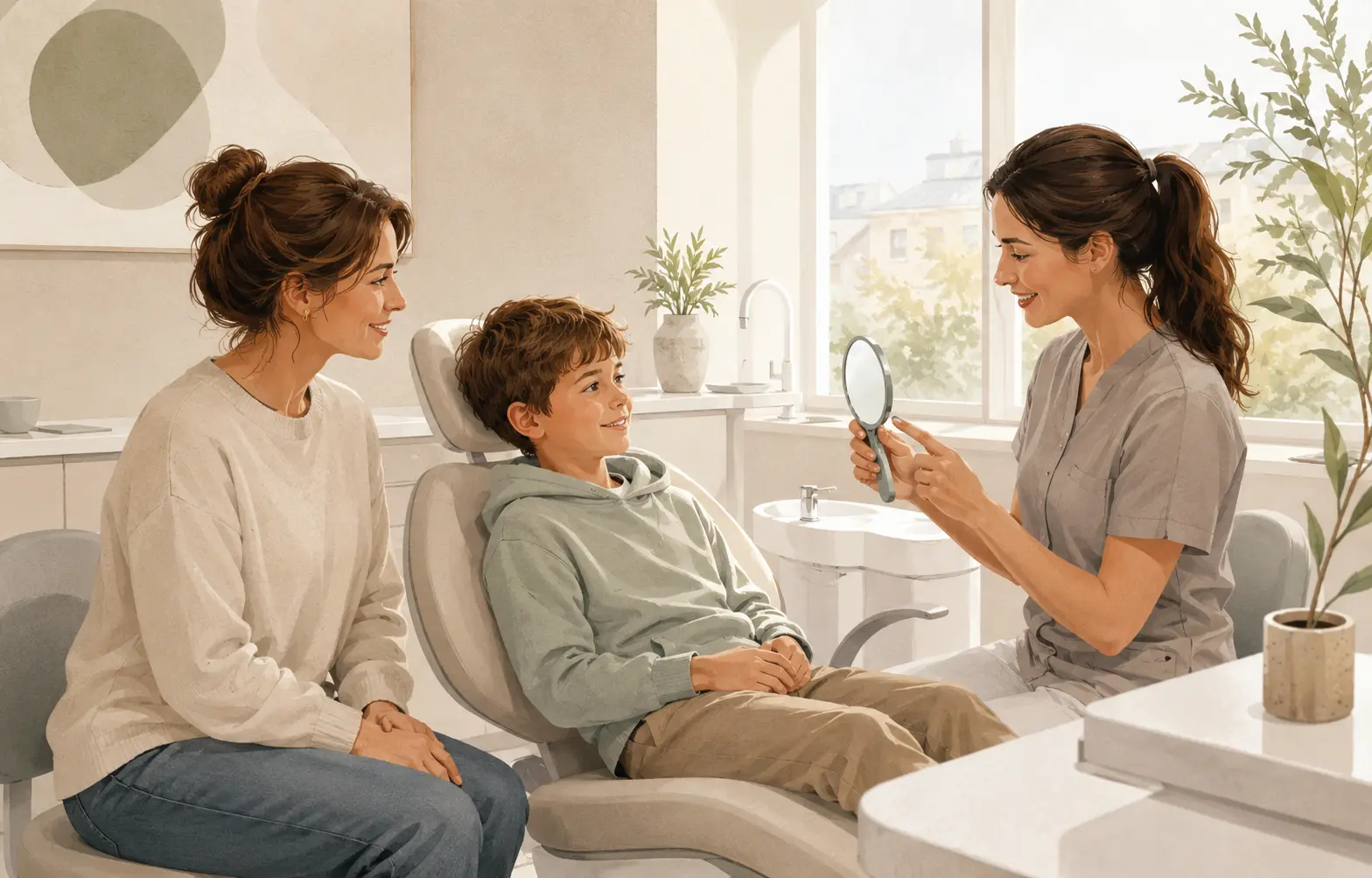
When should your child have a first assessment?
Around age 7, baby teeth and permanent teeth are both present. This is often a good time to check that the teeth are finding their place and that the jaw is not shifting to one side.
The essentials in 20 seconds
An opinion may be helpful if a sign concerns you.
A useful milestone for a first assessment, not a reason to fit braces automatically. Why this age?
Depending on the situation, we wait, monitor development or correct a specific problem.
Four signs worth having checked
These are reasons to have the situation assessed, not necessarily to start treatment.
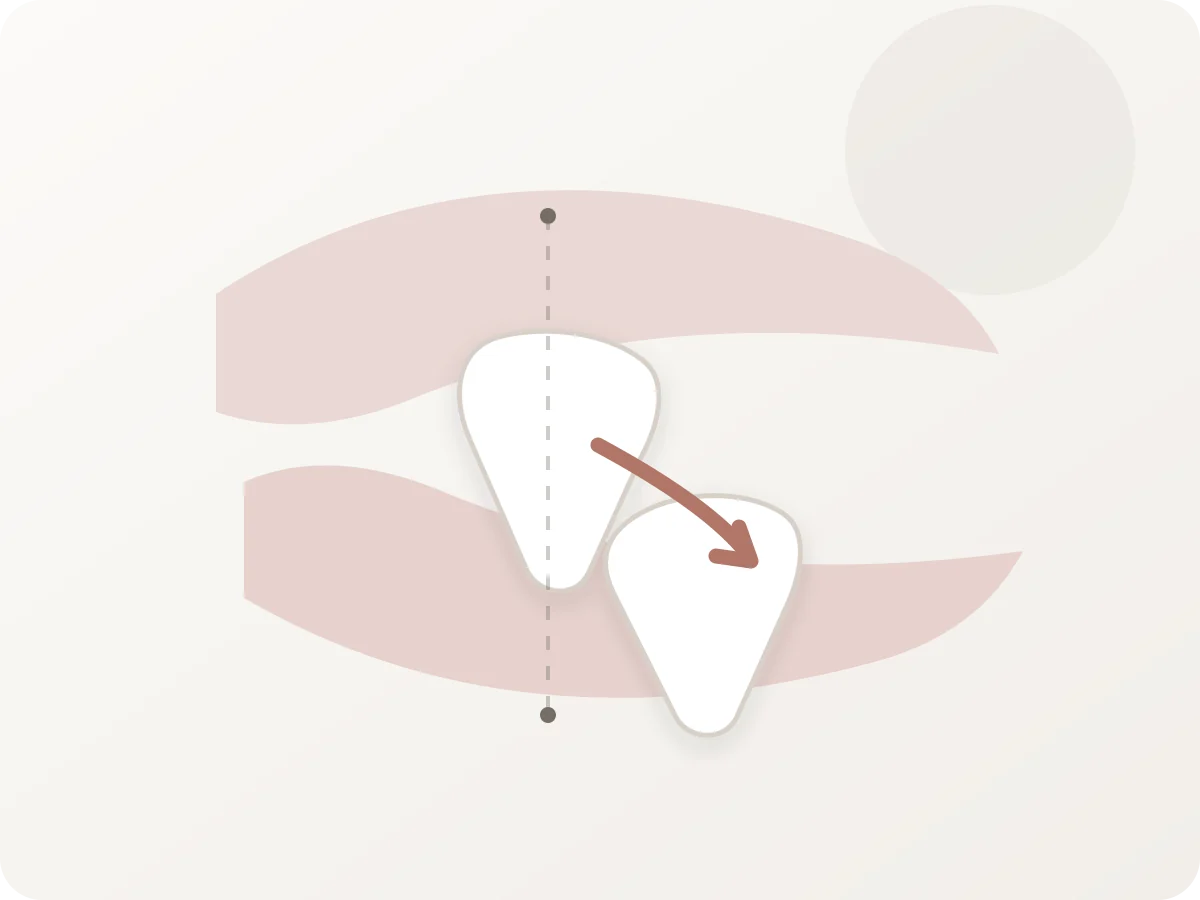
They close in front of the upper teeth.

The chin moves to one side when the teeth meet.

They are more vulnerable to injury.

A tooth is slow to come through on one side.
See four other signs
Neighbouring teeth may reduce the available space.
Marked overlapping, an open bite or a deep bite.
Prolonged sucking can affect the bite.
A paediatric or ENT opinion may also be needed.
What we assess at this age
In preventive orthodontics, we monitor how the teeth come through and how the jaws develop. When a targeted correction is helpful while a child is growing, this is known as interceptive orthodontics.
The aim is not to achieve perfect alignment during childhood. More comprehensive treatment may still be needed during the teenage years.
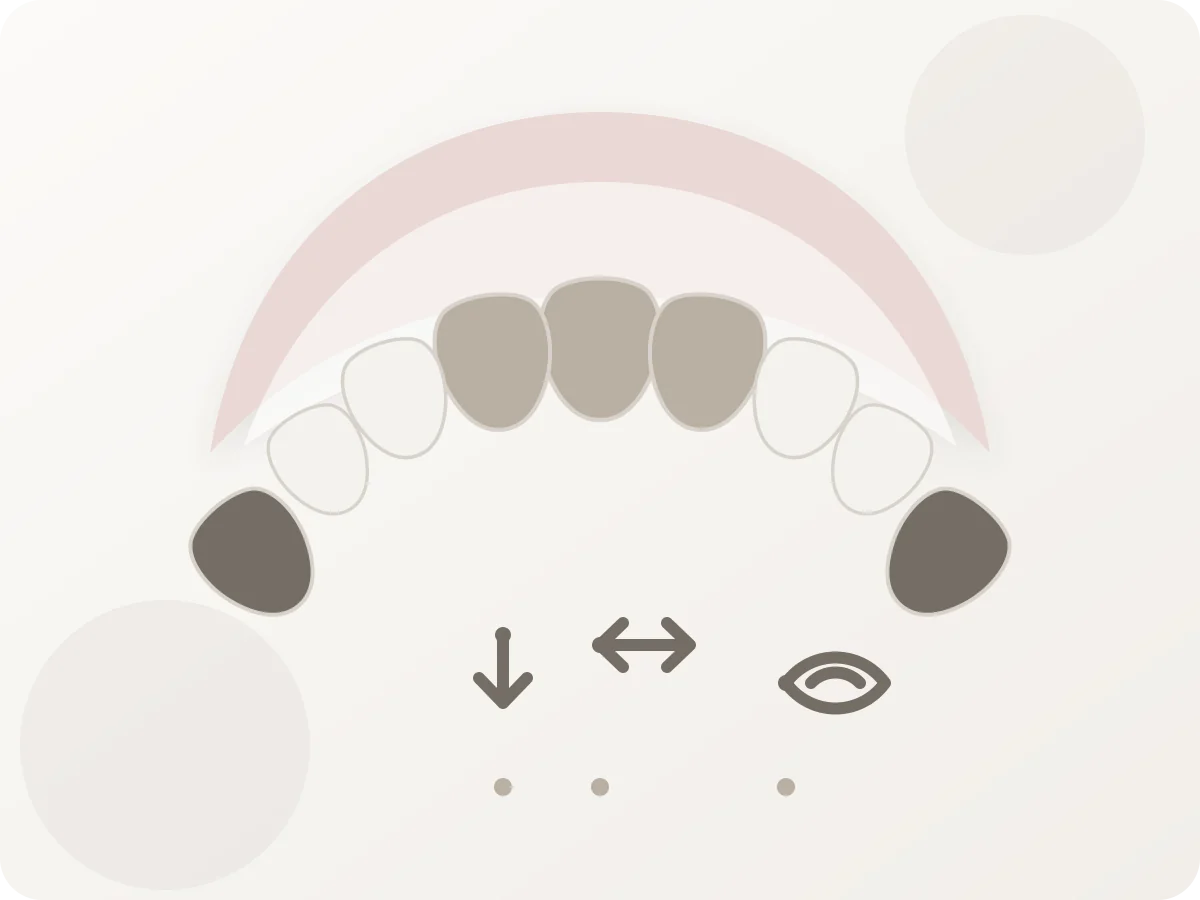
How the upper and lower teeth meet.
The room available for the permanent teeth.
The path and symmetry of teeth coming through.
What happens during the initial assessment?
We begin by understanding what concerns you, then examine the teeth and how your child closes their mouth. An X-ray is only recommended if it will provide useful information.
-
Listen to your concerns
What you have noticed and your child’s dental history.
-
Examine
The face, how the teeth meet, the available space and how the teeth are coming through.
-
Explain the next step
See your child again later or correct an identified problem, with a clear reason for doing so.
After the assessment: sometimes, no treatment for now
When there is no urgency, we prefer to wait. If a problem would benefit from correction, we explain what the treatment is intended to change and why now is the right time.
The teeth and jaws are developing well: no treatment is recommended.
We see your child again after a few months to check their development.
We correct an identified problem during a period when treatment may be helpful.
Which appliances or procedures may be recommended?
Depending on the problem, this may involve a space maintainer, a fixed or removable expansion appliance, a functional appliance, partial fixed braces or eruption guidance. A planned extraction of a baby tooth may sometimes be indicated.
There is no single appliance that suits every child. The choice depends on growth, oral hygiene and how readily the child can wear the appliance. More comprehensive orthodontic treatment may still be needed later.
What can reasonably be expected
- correct certain functional shifts;
- preserve space or help a tooth come through;
- in certain situations, reduce the risk of injury to very prominent front teeth.
What early treatment cannot promise
- avoiding a second phase of treatment, extractions or surgery;
- permanently changing all jaw growth;
- treating a breathing disorder on its own.
In Belgium
What you need to know about reimbursement
In Belgium, certain orthodontic corrections carried out in young children may qualify for partial reimbursement. For early orthodontic treatment, the first flat-rate reimbursement code must, among other requirements, be submitted before the child’s 9th birthday, and the NIHDI (INAMI/RIZIV) conditions must be met.
Fees at Apolline Clinic are not limited to the official convention rates. Your health insurance fund can confirm the reimbursement available for your child.
A total of 150 € when the X-ray is needed.
View the official NIHDI (INAMI/RIZIV) rules View Apolline’s fees
Questions parents ask us
View the medical sources
- American Association of Orthodontists — first assessment by age 7
- American Academy of Pediatric Dentistry — development of the dentition and occlusion
- Cochrane — very prominent upper front teeth in children
- Cochrane — treatment of crowded teeth in children
- British Orthodontic Society — functional appliances


