
Cosmetic dentistry · Uccle, Brussels
Dental veneers in Uccle for a natural-looking smile
Colour, shape, small gaps or wear: a veneer can change the way your smile looks, without aiming for a standardised result.
At your first appointment, we begin by understanding what concerns you, then compare veneers with simpler or more conservative options.
Not sure whether veneers are right for you? That is precisely what the initial assessment is designed to establish.

Cases treated by Damian Szajner at Clinique Apolline
Three treatment plans, three different situations
The photographs show the visible outcome, but also choices of proportions, material and preparation specific to each individual case. Tap an image to enlarge it.
Rebalancing the proportions of the front teeth

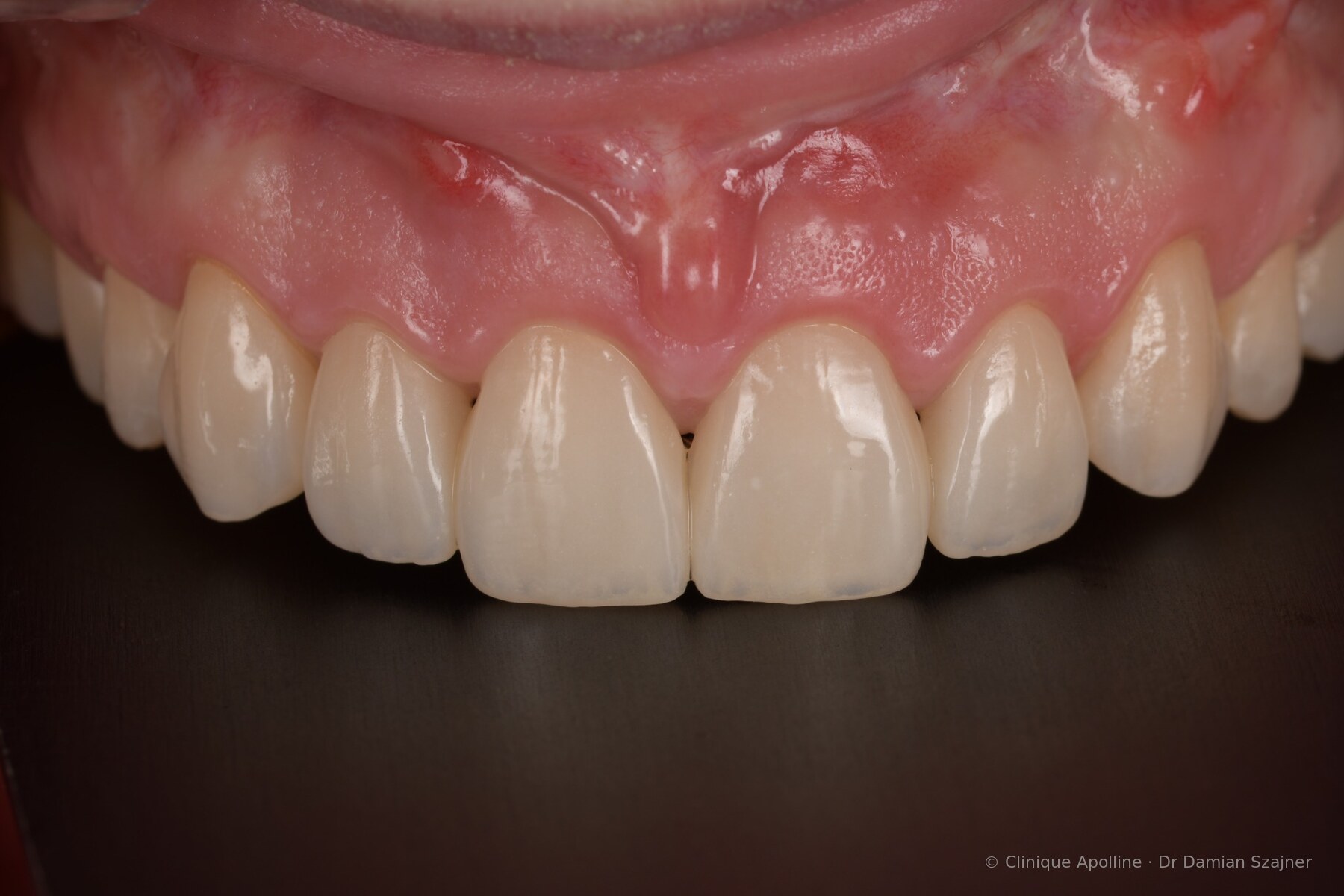
The treatment redefined the proportions and visual continuity of the front teeth while taking account of the gum line and neighbouring teeth.
Closing gaps between the incisors
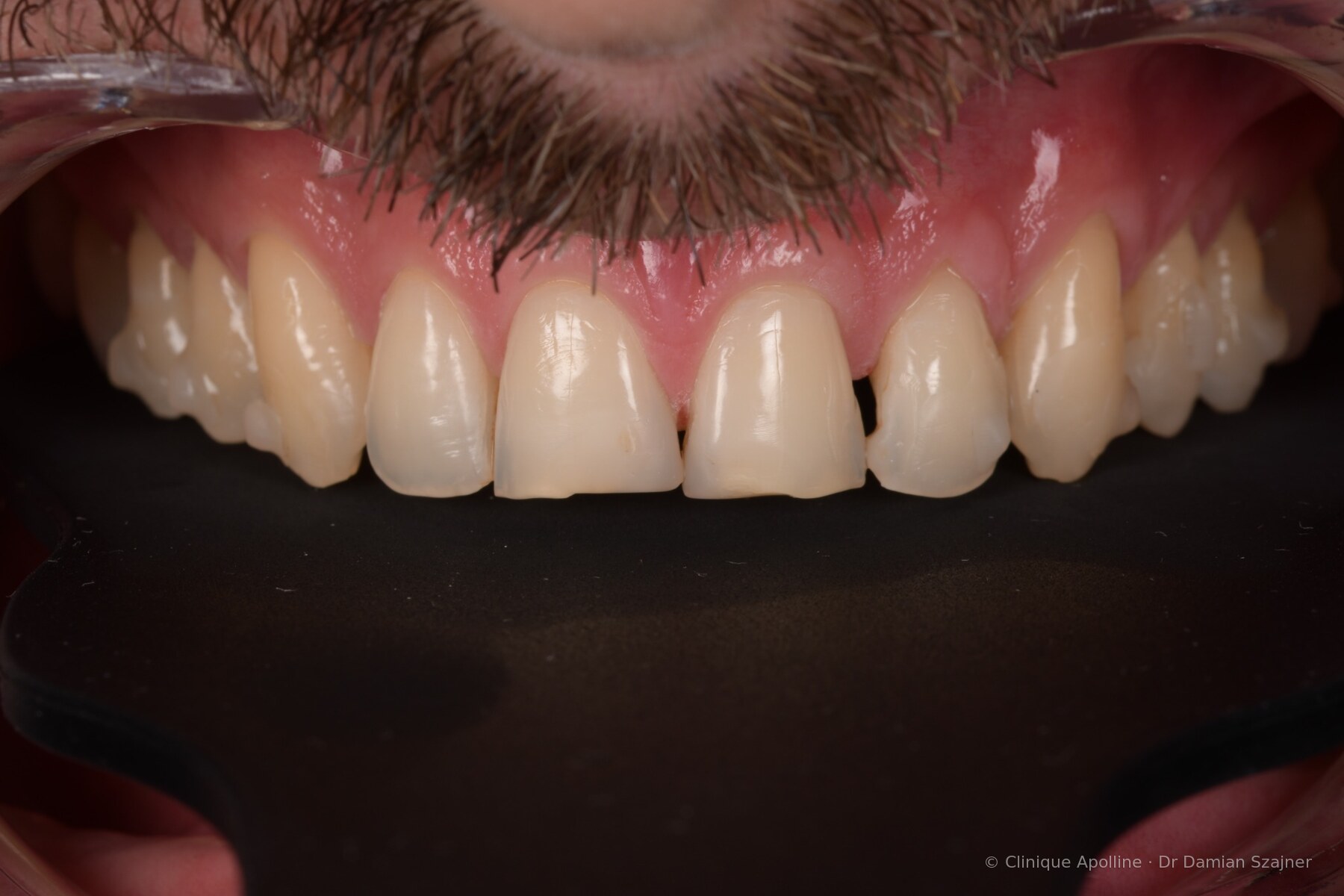
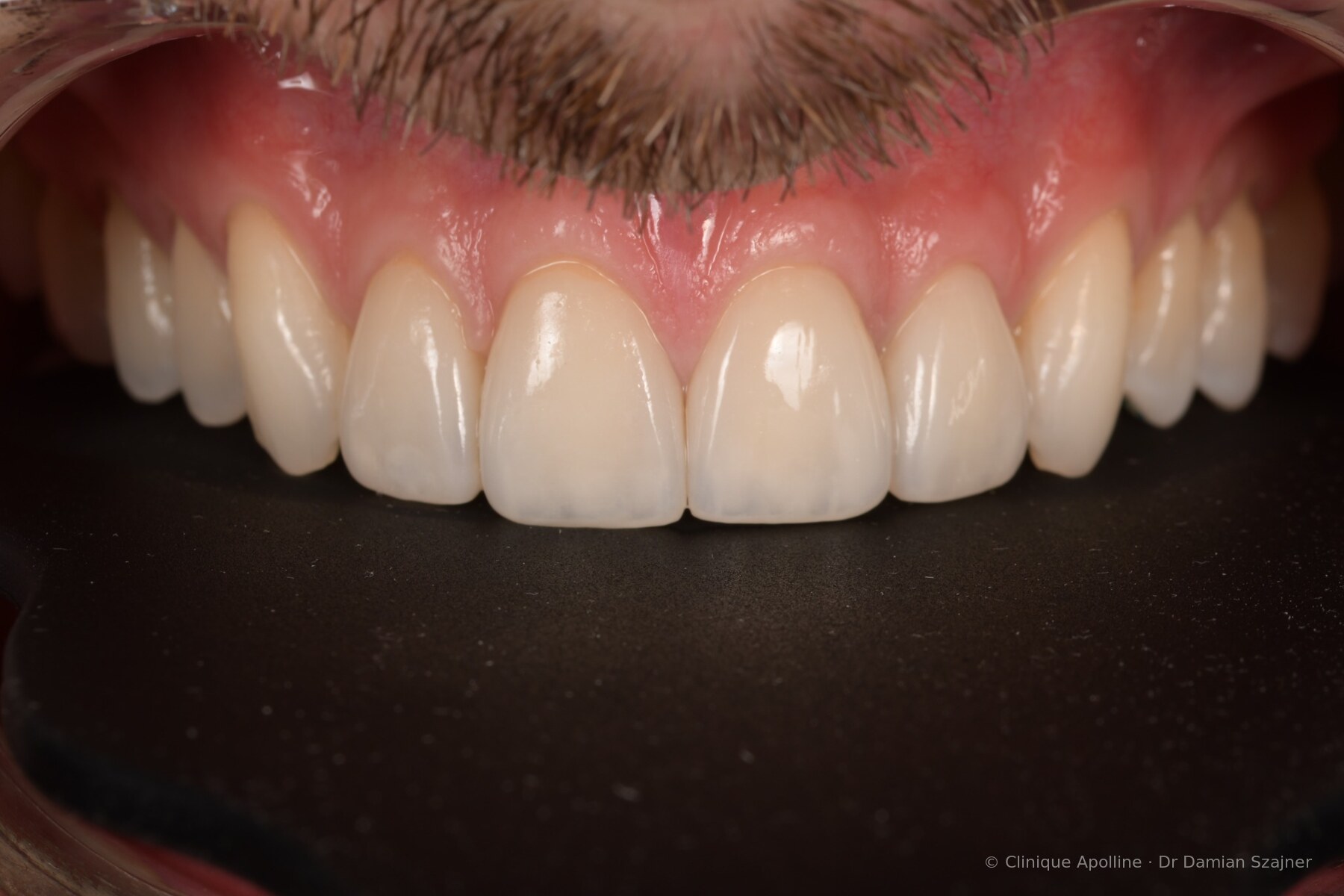
Four ceramic restorations balanced the proportions and closed the gaps without making the teeth look uniform.
The preparation stage before bonding
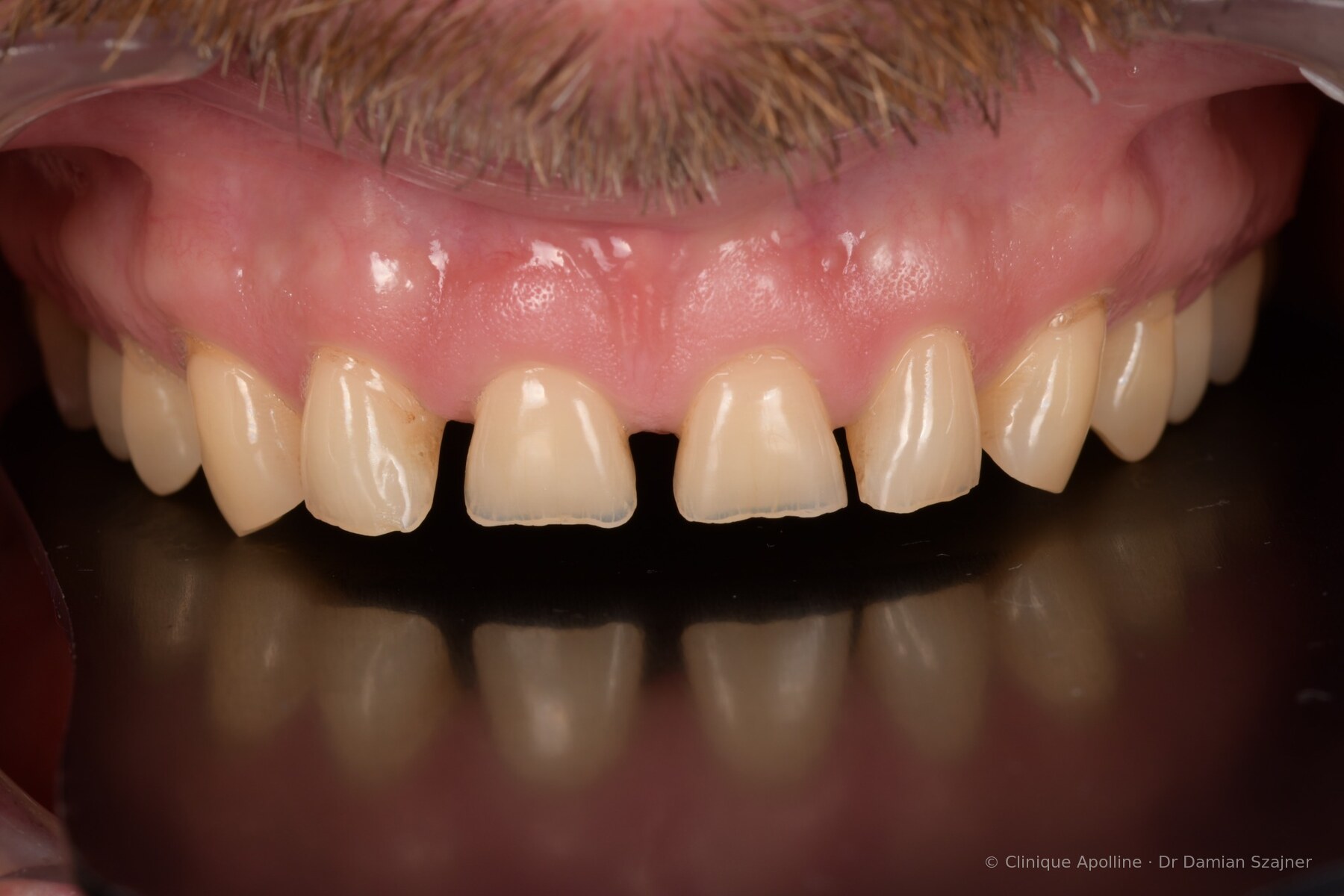
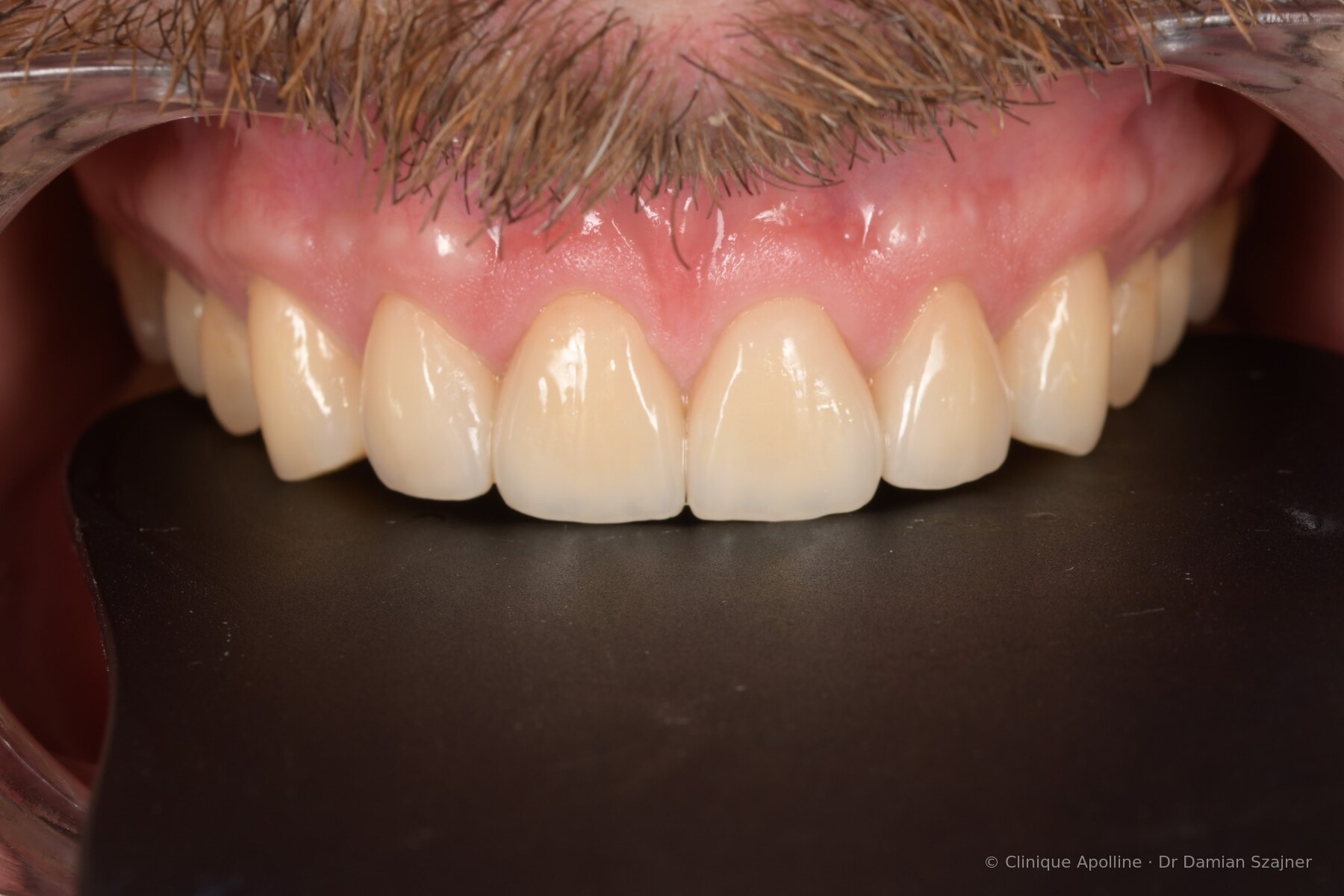
This is not a standard before-and-after comparison: it shows a targeted clinical preparation followed by the result after bonding.
View the fourth case: a more comprehensive rehabilitation
When veneers alone are not enough
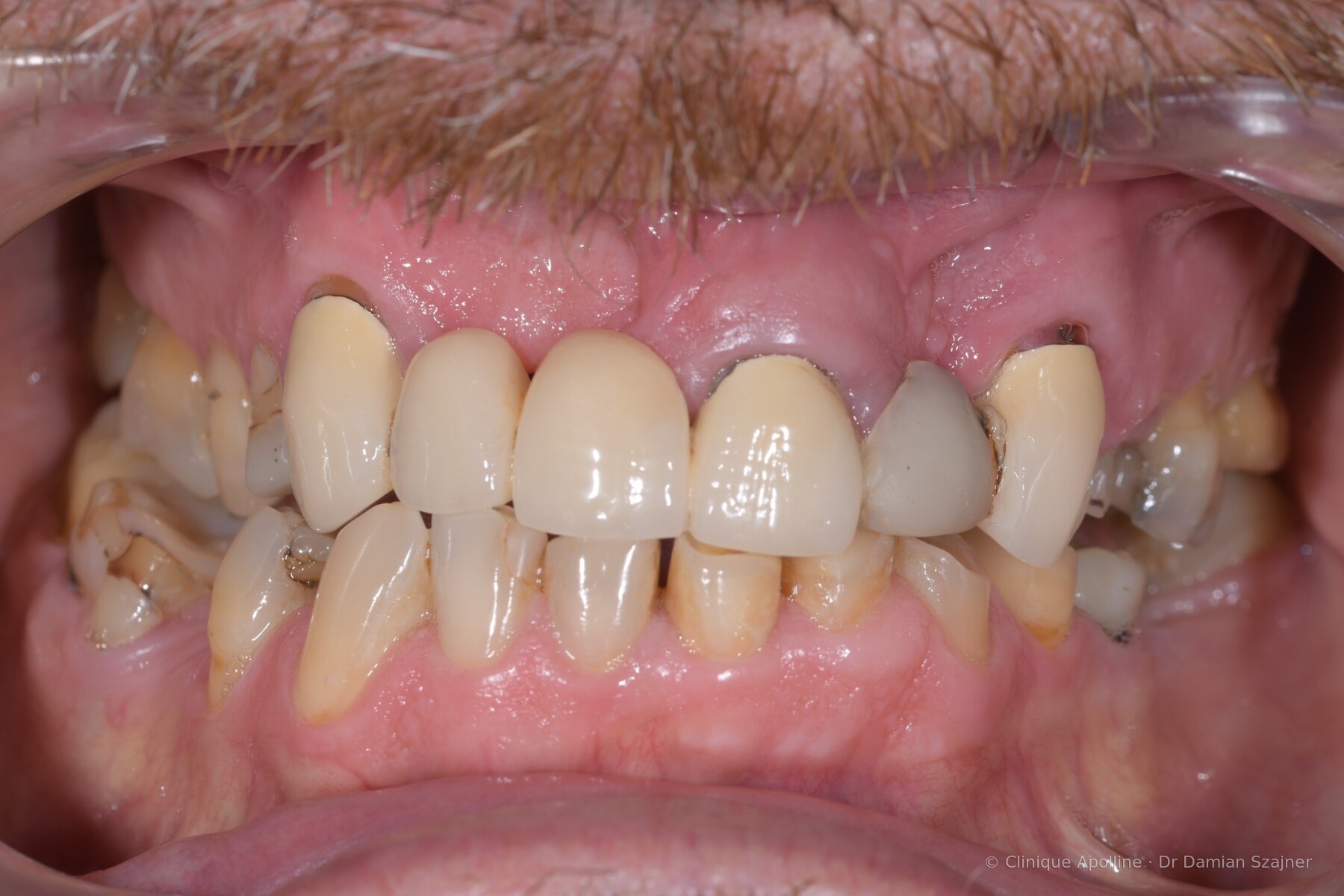

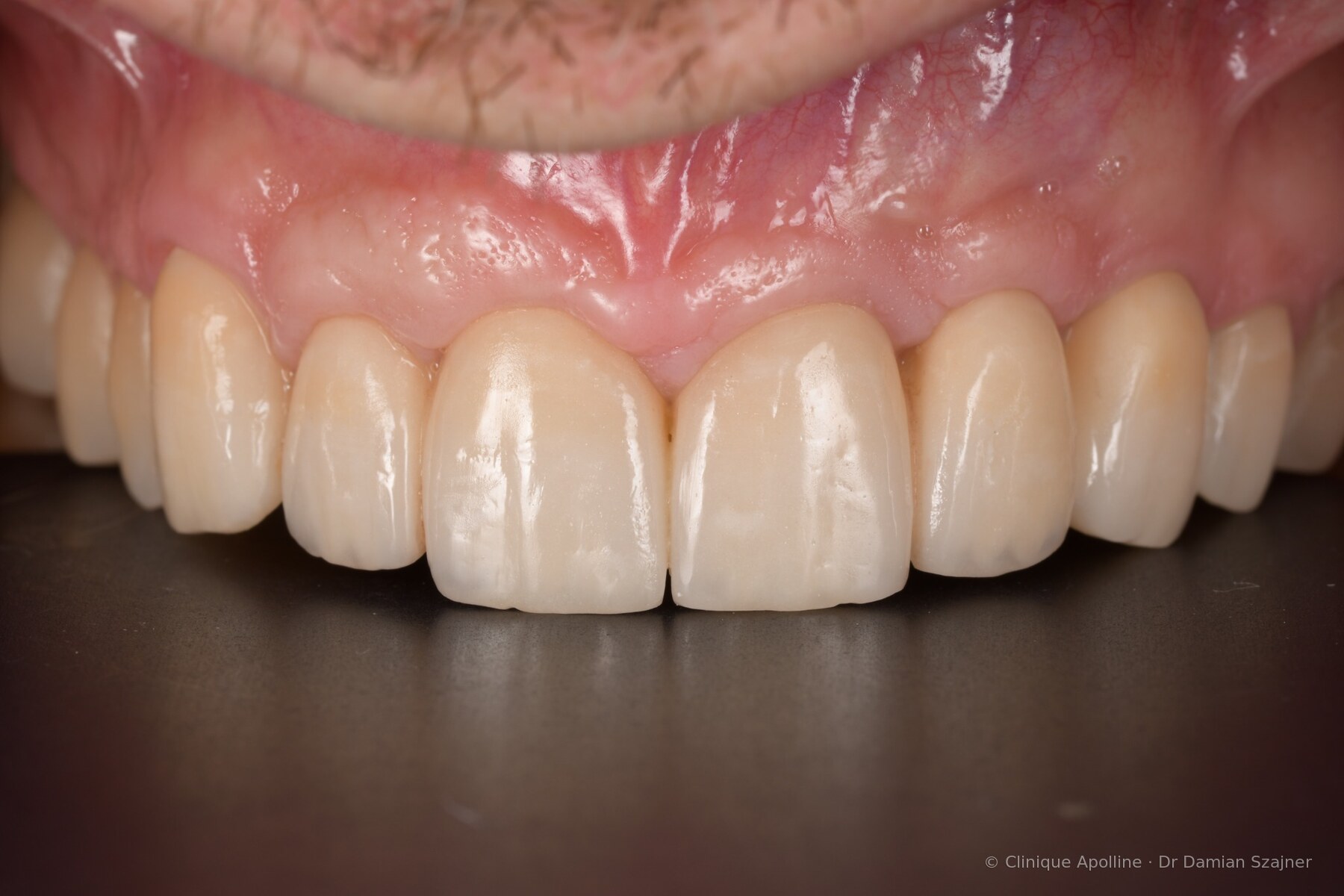
This is not a case involving veneers alone. It shows a more comprehensive prosthetic rehabilitation planned in the context of the smile as a whole.
Would you like to know what is realistic in your case? Request a consultation →
Your goals first, then the diagnosis
What would you like to improve?
The assessment begins with what you see in the mirror, then establishes whether a veneer is genuinely suitable.
- Persistent discolouration
When whitening cannot improve the colour sufficiently, a veneer can change the visible appearance of the tooth.
- Shape or proportions
A tooth that is too short, asymmetrical or separated by a small gap: the treatment must remain in harmony with the lips, gums and neighbouring teeth.
- Limited wear or a small chip
A restoration can rebuild the visible surface or edge of a tooth if the remaining support and bite allow it.
A photograph shows what is visible; the assessment looks for any clinical constraints. Available enamel, gums, tooth contacts, bruxism and existing restorations can all affect whether veneers are appropriate.
Preserve before restoring
A veneer is not always the right solution
The fastest treatment is not necessarily the most conservative. We first compare what each option can genuinely correct.
 Before
 After
AfterBrighten
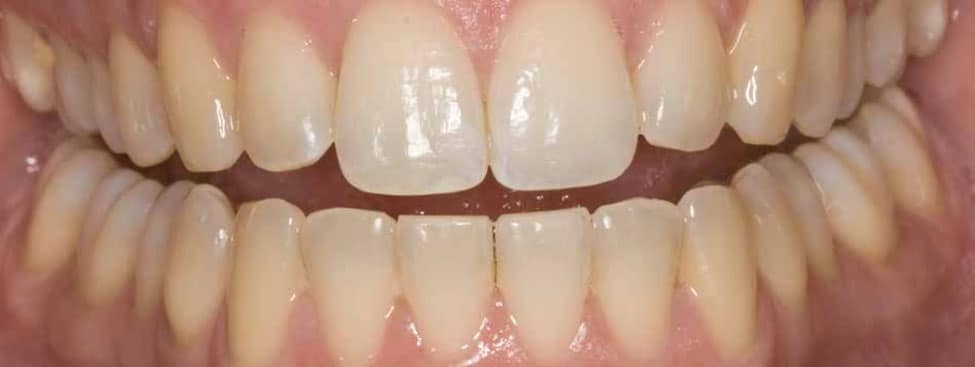
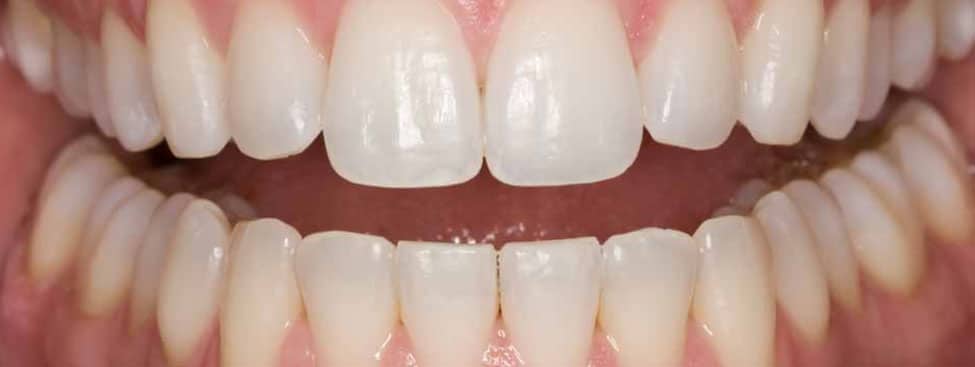
Teeth whitening
It changes the shade without altering the shape of the tooth. It may be enough when colour is the only concern.
Restore locally
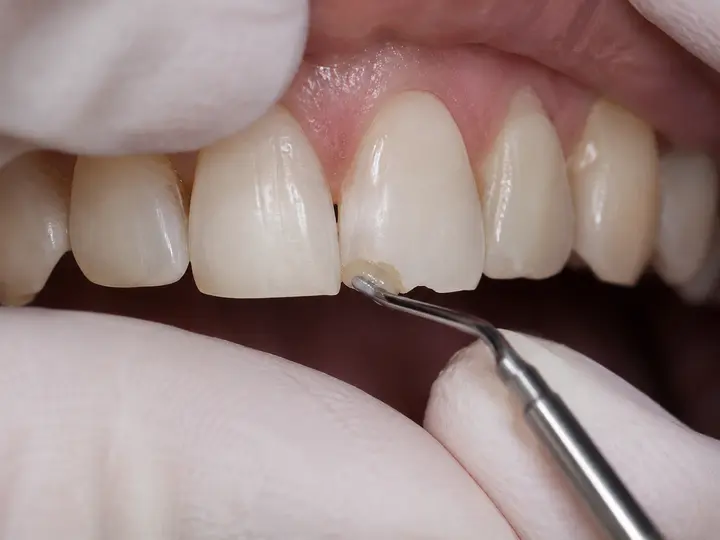
Composite
It can repair a small chip, adjust a tooth’s shape or close a small gap, often with minimal intervention, although it may require more maintenance over time.
Reposition
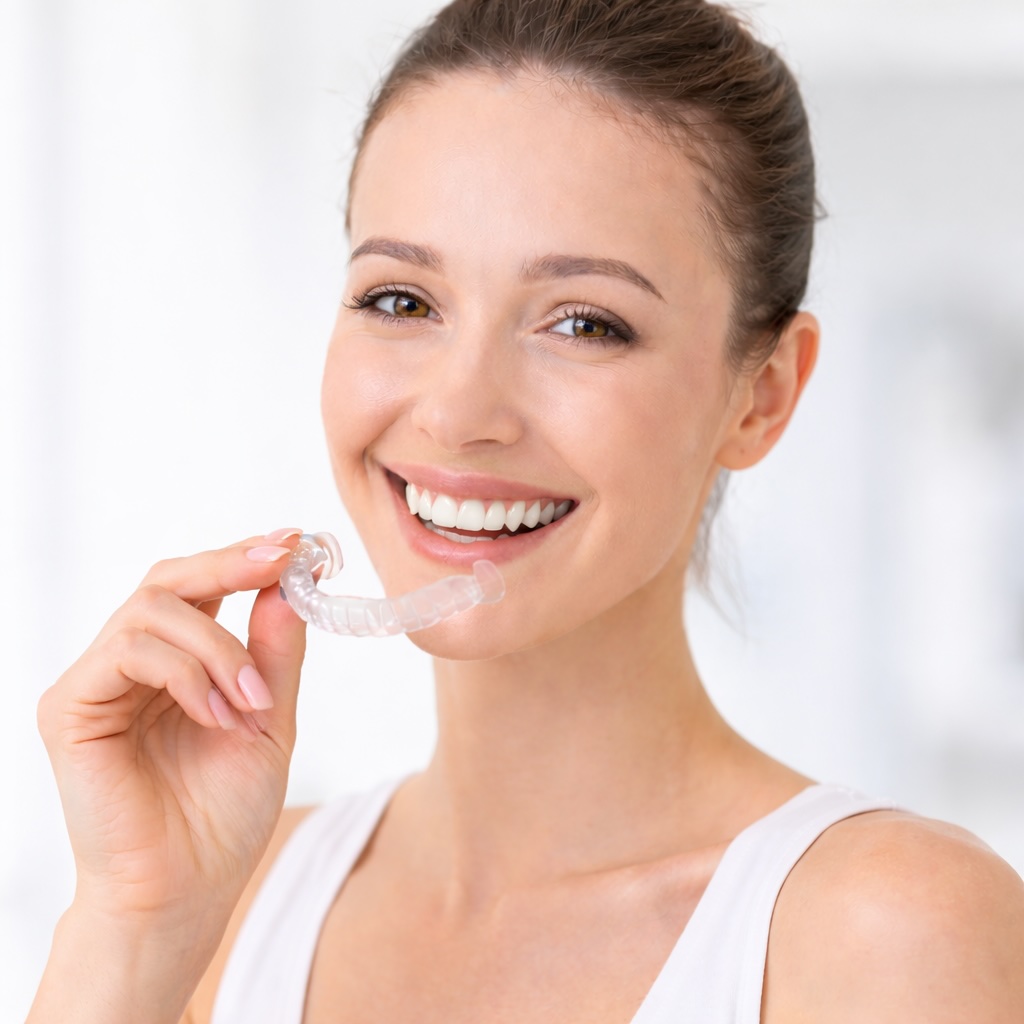
Orthodontics
It changes the position of the teeth without covering them. It should be considered when the main issue is tooth alignment or the bite.
These approaches can also be combined. Whitening, orthodontic correction or a small composite restoration may sometimes reduce the number of veneers required.
When might a crown be more appropriate?
A crown covers more of the tooth. It may be more appropriate when a tooth is severely weakened, already has extensive restorations or needs protection on several surfaces. The choice depends on the actual condition of the tooth, not only on the cosmetic goal.
From the initial assessment to bonding
The number of teeth involved, their shape and their shade are determined gradually through stages that help you understand and approve the treatment plan.
Listen and examine
We begin with what concerns you, then assess your teeth, existing restorations, gums, smile and the way your jaws close.
Design and, where useful, preview the result
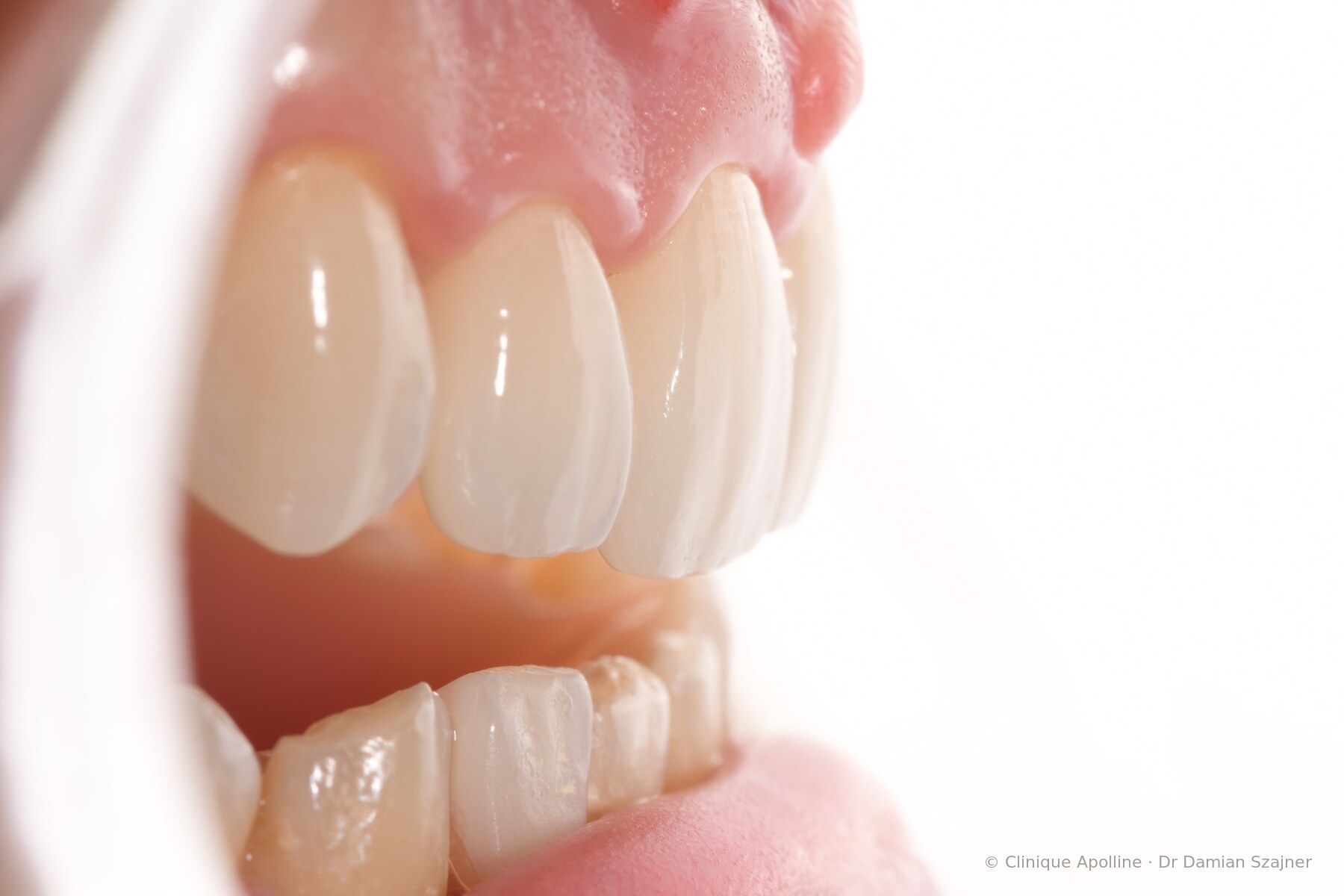
Photographs and a digital impression can help define the shape and number of teeth involved. A wax-up or mock-up may allow you to preview the proposed volume before the definitive restorations are made.
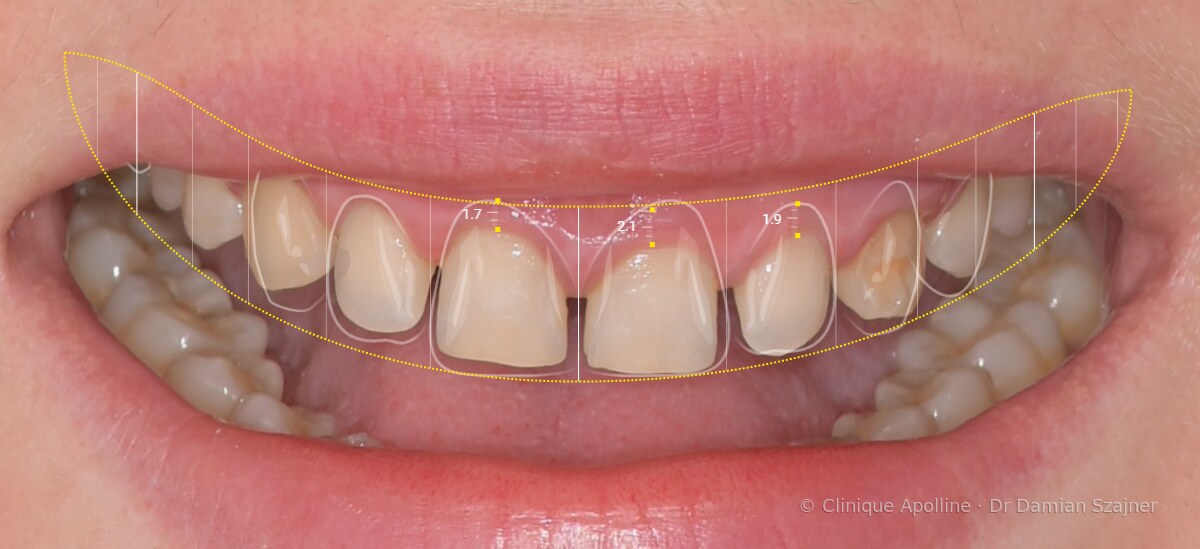
Preserve, craft, try in
Depending on the situation, the tooth may require no preparation or only limited preparation. The ceramic restorations are then custom-made and tried in to check their fit and integration.
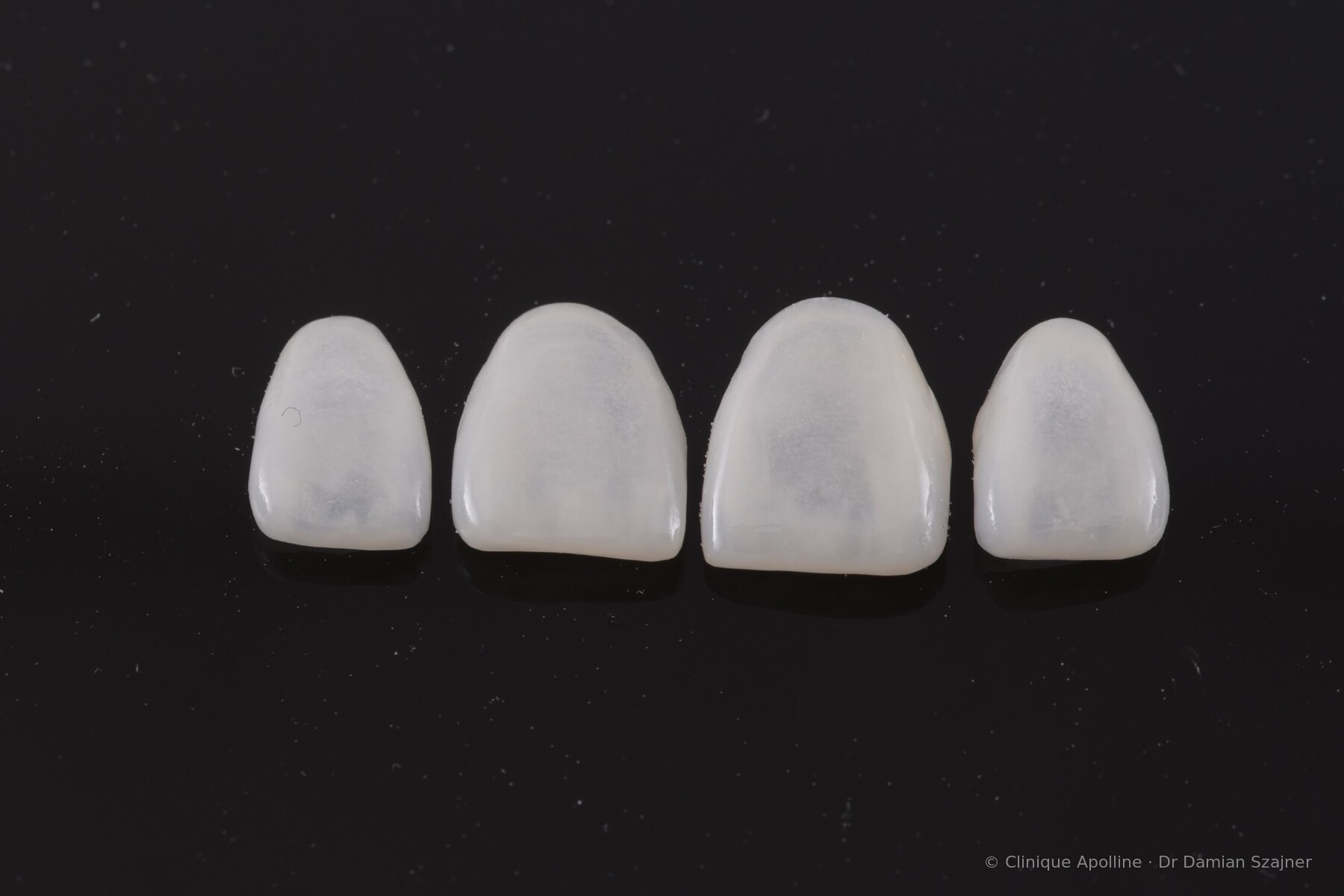
Approve, bond, review
Once the fit and shade have been approved, the restorations are bonded while the teeth are carefully isolated. Tooth contacts and the bite are checked after placement and during follow-up.
The treatment plan is not fixed at the first appointment: the quotation and alternatives are explained before you make any decision.
What you should know before deciding
A veneer is a durable restoration, but it is not indestructible. How well it lasts depends in particular on the underlying tooth, bonding, bite, oral hygiene and habits.
Preserve the enamel
Where the situation allows, the treatment plan aims to preserve as much enamel as possible. Any preparation is irreversible and must be justified.
Start from a healthy foundation
Tooth decay and gum inflammation must be treated or stabilised. A veneer does not protect the tooth from decay at its margin.
Assess the forces involved
Bruxism, clenching and certain tooth contacts increase the forces on veneers. A protective night guard may be recommended depending on the situation.
Risks and limitations you should know about
A veneer can debond, chip, fracture, wear or need replacement. Temporary sensitivity may occur after certain stages. The margins around restorations, neighbouring teeth and gums can also change over time. The risks specific to your situation are explained before treatment begins.
Indicative fees
Price per veneer. The total amount depends on the number of teeth, the planning stages and any treatment that may be required. A detailed quotation is provided and explained before any treatment begins. View Apolline’s fees.
What the quotation should clarify
The number of teeth involved, the chosen solution, the alternatives, any preliminary stages, temporary restorations if required and the follow-up arrangements.
There is no automatic standard number or ‘set’ of veneers.
Treatment provided by Damian Szajner · Restorative and prosthetic dentistry.
Clinical content reviewed on .


